
The Benefits of Doing a Freediving and Yoga Retreat
Stress is something that touches us all.
If there’s one lesson we can take from the whirlwind of modern life, it’s the importance of self-care.
In a world full of distraction, constant stimulation, and subtle chaos, it can be difficult to pause, breathe, and practice stillness. The longer we put off these practices, the more the “garden” of our mind becomes overrun with mental clutter.
When we feel chronically tired, anxious, or disconnected, it’s often a sign that we’ve neglected our mental and emotional wellbeing.
All it takes is a little intentional care: gardening for the mind.
Fortunately, we know very effective gardeners: Breathwork, Freediving, and Yoga.
“Yoga is just good for you.” — Kareem Abdul-Jabbar
“Freediving is about silence…the silence that comes from within.” — Jacques Mayol

Freediving and Yoga: A Path to Mindful Presence
Across the world, retreats are emerging that combine mindful physical practices with lifestyle training.
Freediving, in particular, is receiving recognition not just as a sport, but as a tool for mental clarity, presence, and self-awareness. While many perceive freediving as extreme or only for the highly fit, it is in fact accessible to anyone seeking mindfulness.
Our retreats integrate breathwork, yoga, and freediving to enhance breath awareness, inner focus, and meditative calm, making it an ideal practice for those looking to deepen their personal growth and connection to themselves.
Through these practices, we have developed a training program that gives students a foundation for personal growth, mental clarity, and improved freediving performance.
“Kundalini teaches us, through postures (asanas or kriyas), breath-work (pranayama), chanting (mantras), meditation and relaxation, to embrace our wholeness, the fullness of who we each are, and to recognise that at our core, we have pure, peaceful and joyful potential waiting to be explored.”

Freedivers Need to Be Mindful
Fear and anxiety can be crippling on dry land—and in the water, they are even more impactful. Negative thoughts often arise during freediving sessions or pool training: “Oh no, I already feel the urge to breathe!”, “CO₂ buildup is uncomfortable!”, “What if I blackout?”
At Blue Mind Flow retreats, students are taught to shift from the “thinker of thoughts” to the “observer of thoughts.” By mindfully noticing thoughts without identifying with them, divers can allow them to come and go, increasing relaxation and reducing anxiety. Since the brain consumes large amounts of oxygen, a calmer mind helps conserve energy and prolong dives, while also fostering confidence underwater.

Freedivers Must Master Their Breath
If you’ve practiced yoga, you’ll know the central role of breath. Yogis understand that the breath is the bridge between mind and body—calm, deep breathing leads to a calm, focused body and mind. Conversely, shallow, erratic breathing fosters restlessness and tension—counterproductive for freedivers.
Breathing efficiency can also be measured through heart rate.
Just as a car engine consumes more fuel at higher RPMs, a faster heart rate consumes more oxygen. Conscious breathing techniques taught during freediving and yoga help regulate the nervous system, activate the parasympathetic system, and promote instant relaxation, preparing the body for peak performance.
Regular practice also increases lung capacity and flexibility. Even divers with large lungs can be limited if the muscles around the rib cage are inflexible. Yoga and breathwork stretch these muscles, allowing full oxygen intake and distribution throughout the body.
Freedivers Must Become One with the Present Moment
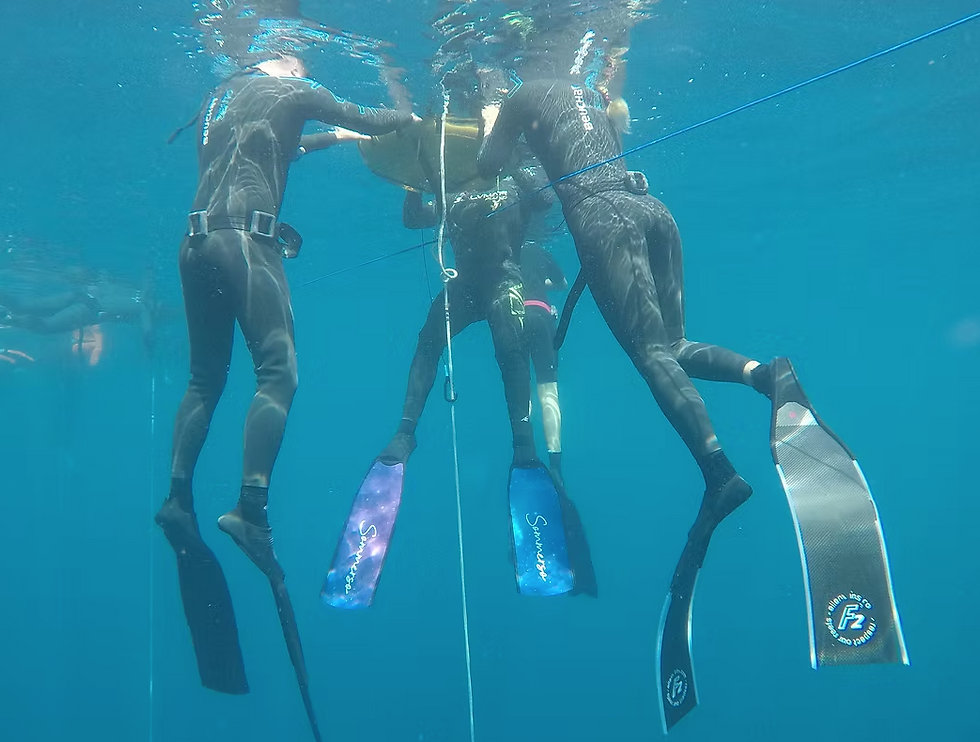
Focus and presence are essential in both yoga and freediving. Breaking concentration during yoga makes poses harder; losing focus while surfing or diving increases risk and tension. Freedivers cultivate presence by focusing inward—observing heartbeat, bodily sensations, or the dive line ahead.
By experimenting with techniques to stay present and mindful, divers develop resilience, patience, and flow, all while maintaining a calm, positive mindset.
Breath is always a guiding anchor, whether practising in the comfort of our home, moving through yoga sequences, or during underwater meditative dives.
Time
Most beginner freediving courses are conducted over two or three days, often including pool sessions followed by open water dives. Whether through Molchanov, PADI, SSI, or AIDA, these courses are structured similarly.

While it’s possible to complete a short course and meet basic requirements, many students find that real growth happens when they have more time to practice mindfully. Freediving, like meditation, is not about instant results, it’s about the journey, the deepening of presence, and the awareness that emerges along the way.

When programs allow for slower, more intentional progression, students can focus fully on their breath, posture, and connection to the water without pressure or comparison.
Comfort and Routine
Stepping into new practices can be overwhelming, and freediving can be both physically and mentally demanding.
To fully benefit, the body and mind must be supported.

Comfortable accommodation, nourishing meals, and a calm environment help participants feel grounded, so they can approach each session with presence and curiosity.
A retreat that takes care of logistics allows students to focus entirely on their inner journey, maximising the benefits of freediving, yoga, breathwork, and sound healing.
Instruction and Strategy

Experienced instructors observe patterns and adapt practices to each individual.
By combining physical routines (yoga), mental routines (meditation), and sound healing, the learning process becomes highly effective and deeply supportive.
For example, after a challenging freedive session, a student may feel frustration or disappointment.
In our thoughtfully designed retreat, this is counterbalanced with calming practices and reflection exercises that restore confidence and clarity, preparing the mind for the next day.
Tailored instruction ensures participants progress at their own pace, cultivating patience, self-compassion, and mastery rather than pushing for immediate results.
Social Connection

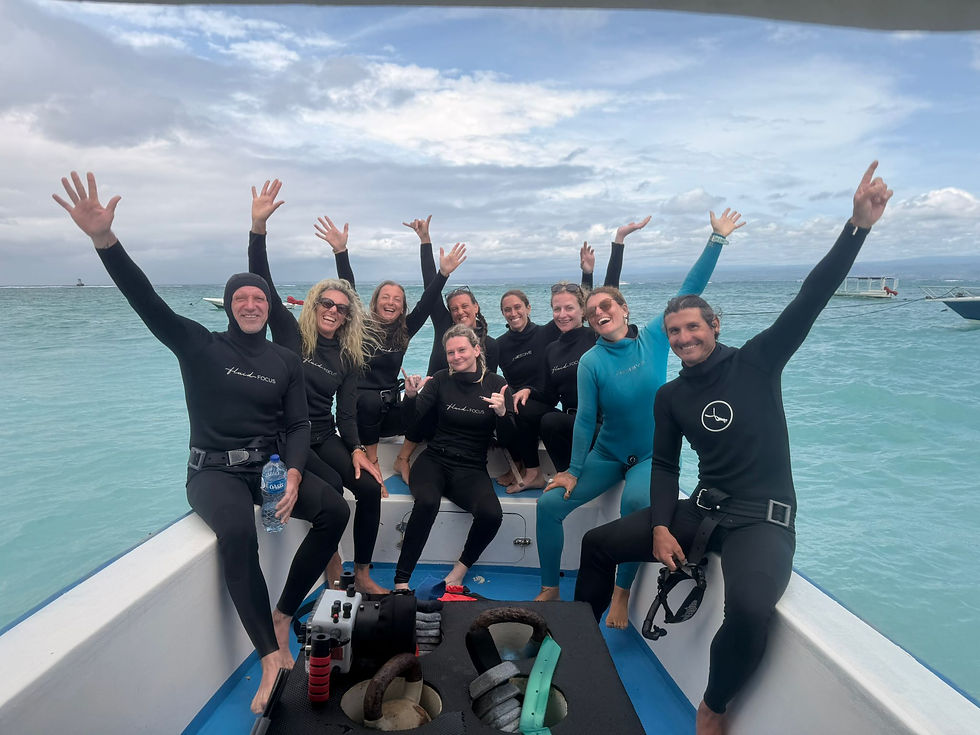
One of the most rewarding aspects of a retreat is the community of like-minded individuals. Learning alongside others who are committed to growth fosters connection, support, and shared joy.

Freediving and yoga retreats attract people seeking personal development, mindfulness, and deeper awareness, creating an environment where lasting friendships and mutual encouragement flourish.

Why Choose a Freediving Retreat Over a Yoga Retreat?

Both yoga and freediving cultivate presence, mindfulness, and inner balance, but freediving adds a unique, embodied depth that yoga alone cannot fully replicate.
Direct immersion in water: Freediving engages body, breath, and mind simultaneously, creating a profound sense of calm, stillness, and focus.
Mind-body integration through breath: Each dive requires intentional breath control and mental focus, allowing participants to experience presence in real-time.
Exploring inner depth: Freediving is meditation in motion. The water mirrors your inner state, inviting emotional and mental exploration alongside physical awareness.
Flow state activation: The combination of movement, breath, and immersion naturally induces flow states, heightening clarity, creativity, and resilience.
Synergy with yoga: Yoga prepares the body and mind, while freediving deepens presence, resilience, and surrender, reinforcing and expanding the yoga practice.
The Takeaway
Give yourself the gift of time, presence, and care. Immersing yourself fully in a retreat removes distractions, provides guidance, and allows you to explore your potential in a safe, supportive environment.
Let the instructors handle the planning, teaching, and nourishing meals.
Your focus becomes cultivating stillness, mastering breath, moving mindfully, and diving deeply into presence. Through freediving, yoga, breathwork, and sound healing, you emerge renewed, clear, and aligned.
FAQs for Freediving and Yoga Retreats
1. What are the benefits of a freediving and yoga retreat?A retreat helps reduce stress, improve mental clarity, and enhance physical and emotional resilience. It combines breathwork, mindfulness, yoga, and sound healing to support holistic wellbeing.
2. Do I need prior experience?No. Many retreats cater to beginners, providing guidance and support so everyone can progress safely and mindfully.
3. Why choose a retreat over a standard freediving or yoga course?A retreat provides a holistic experience: structured learning, comfort, tailored meals, community support, and a mindful environment. It’s not just training, it’s a journey toward inner clarity, presence, and self-awareness.
4. Why choose a freediving retreat instead of a standard yoga retreat?While yoga cultivates presence, flexibility, and mind-body awareness, freediving offers a unique, embodied depth that amplifies these benefits:
Engages body, breath, and mind simultaneously in water, creating a direct, tangible connection to presence.
Strengthens nervous system regulation through conscious breathwork.
Cultivates meditation in motion and flow states that extend beyond the yoga mat.
Mirrors your emotional and mental state, allowing for deep inner exploration.
Builds on yoga practice by applying awareness dynamically, reinforcing mindfulness, resilience, and confidence.
In short, freediving retreats expand the benefits of yoga, giving participants a more immersive, embodied experience of presence, stillness, and self-discovery.
5. I already freedive—why should I join this retreat?Even experienced freedivers benefit from this retreat because we integrate advanced breathwork, yoga, mindfulness, and sound healing into a holistic program. This allows you to:
Refine your mental focus and presence underwater.
Strengthen nervous system control and recovery.
Explore new depths of self-awareness and meditative practice.
Connect with a supportive community of like-minded individuals.

Joining the retreat is not just about improving your diving,
it’s about deepening your relationship with yourself and experiencing a richer, more mindful practice
both in and out of the water.

Comments